



What Quantum R™ Stands For
Quantum R™ is not a single treatment but a protocol architecture: each phase defines a distinct clinical objective, a corresponding set of interventions, and — for research purposes — a corresponding set of measurable endpoints. This document sets out that architecture in protocol form, as a working basis for scientific review: material suitable for a sponsored-research discussion, an ethics-committee (IRB) submission, or a university research collaboration, consistent with the pathway to scientific validation outlined separately for ZOE Quantum R™.
Protocol Architecture - The Four Phases
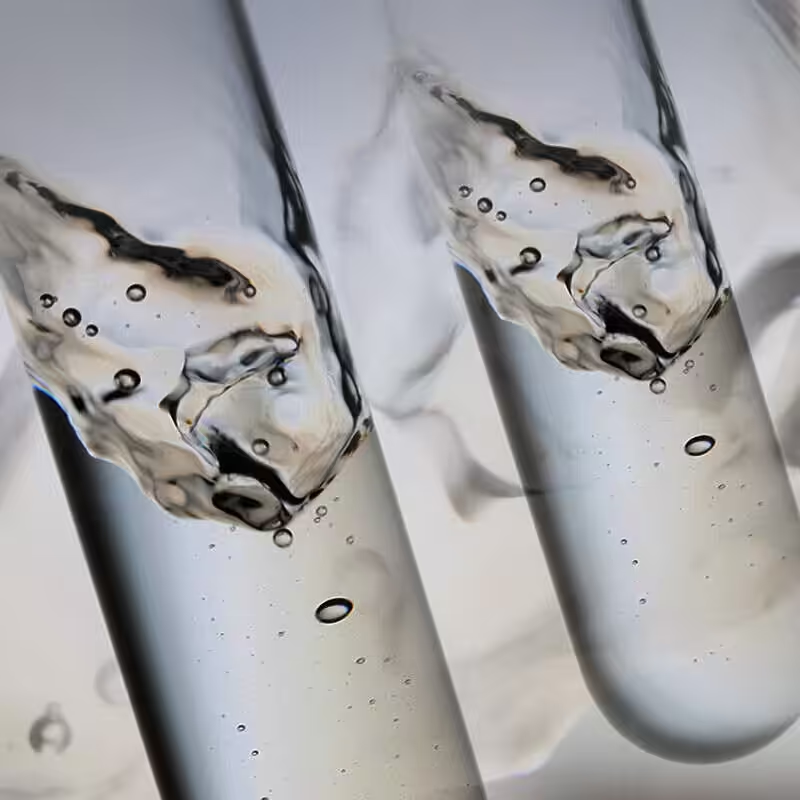
PHASE I — REVIEW — Diagnostic Foundation
Definition: Review is the diagnostic foundation of the protocol: not a single test, but the base for every medical evaluation, in which a complete set of medical and clinical exams is gathered and analyzed before any intervention is considered.
Purpose: To generate a comprehensive, evidence-based profile of the individual's current physiological, metabolic, and biological status, against which every later phase is measured.
Protocol components:
- Advanced biomarker panels (blood, hormonal, and, where applicable, genetic/epigenetic testing)
- AI-assisted analytics, aggregating biomarker, imaging, and functional data into a structured status profile
- Metabolic and inflammatory mapping, characterizing baseline metabolic function and systemic inflammatory load
Scientific role: Review generates the baseline dataset required for any before/after outcome measurement, and defines eligibility (inclusion/exclusion) for individual participants in a study.
PHASE II — REPAIR — Cellular Restoration
Definition: Repair is the interventional phase that follows Review. It targets the restoration of cellular function identified as impaired or suboptimal, using either medication or biohacking devices.
Purpose: To address specific cellular and molecular deficits identified in Review, through pharmacological, biologic, or device-based intervention.
Protocol components:
- Regenerative therapies (biologic or pharmacological agents targeting cellular-repair pathways)
- Medication protocols selected against Review-phase findings
- Device-based / biohacking interventions, applied where non-pharmacological restoration of cellular function is indicated
- Cellular and mitochondrial optimization measures
Scientific role: Repair is the primary interventional arm of the protocol and the phase requiring the most rigorous safety and efficacy documentation. Dosing, device parameters, and the decision rules linking Review findings to specific Repair interventions should be pre-specified before any study begins.
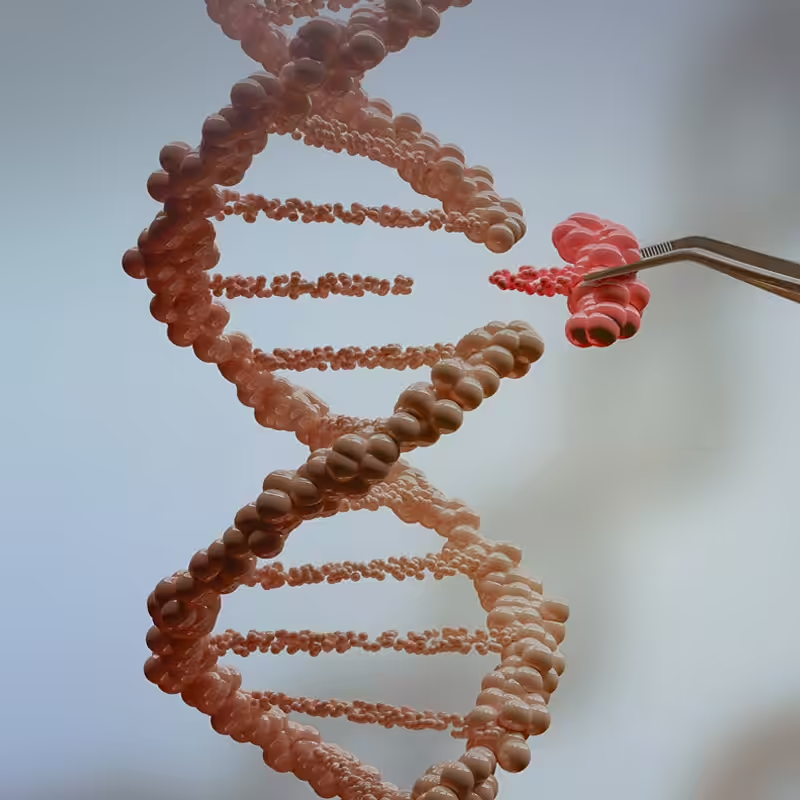

PHASE III — RESET — Systemic Regulation
Definition: Reset follows Repair. It is aimed at regulating cellular function and broader body mechanisms — moving the individual from targeted, localized repair toward systemic physiological balance.
Purpose: To stabilize and regulate the systems affected by, or interacting with, the Repair-phase interventions.
Protocol components:
- Detoxification protocols
- Hormonal re-calibration
- Inflammation-control measures
Scientific role: Reset is where systemic, rather than purely cellular, outcome measures are expected to shift. Hormonal panels, inflammatory markers, and detoxification-pathway markers are the natural candidate endpoints for this phase.
PHASE IV — REVITALIZE — Functional Optimization
Definition: Revitalize is the concluding phase, aimed at optimizing the body's own natural mechanisms for sustained health rather than continuing external intervention.
Purpose: To consolidate the gains of Review, Repair, and Reset into durable, self-sustaining physiological function — health optimization in the fullest sense.
Protocol components:
- Energy optimization
- Longevity-extension protocols
- Aesthetic enhancement, where clinically indicated
Scientific role: Revitalize is where the longer-term, longitudinal endpoints belong: functional capacity, quality-of-life measures, and longevity-associated biomarker trajectories tracked over extended follow-up.
Quantum R™ combines a structured diagnostic base (Review) with three sequential intervention phases (Repair, Reset, Revitalize), each with its own mechanism and its own expected biological signature. That structure is what makes the protocol testable: each phase proposes a measurable change, in a defined population, over a defined interval.